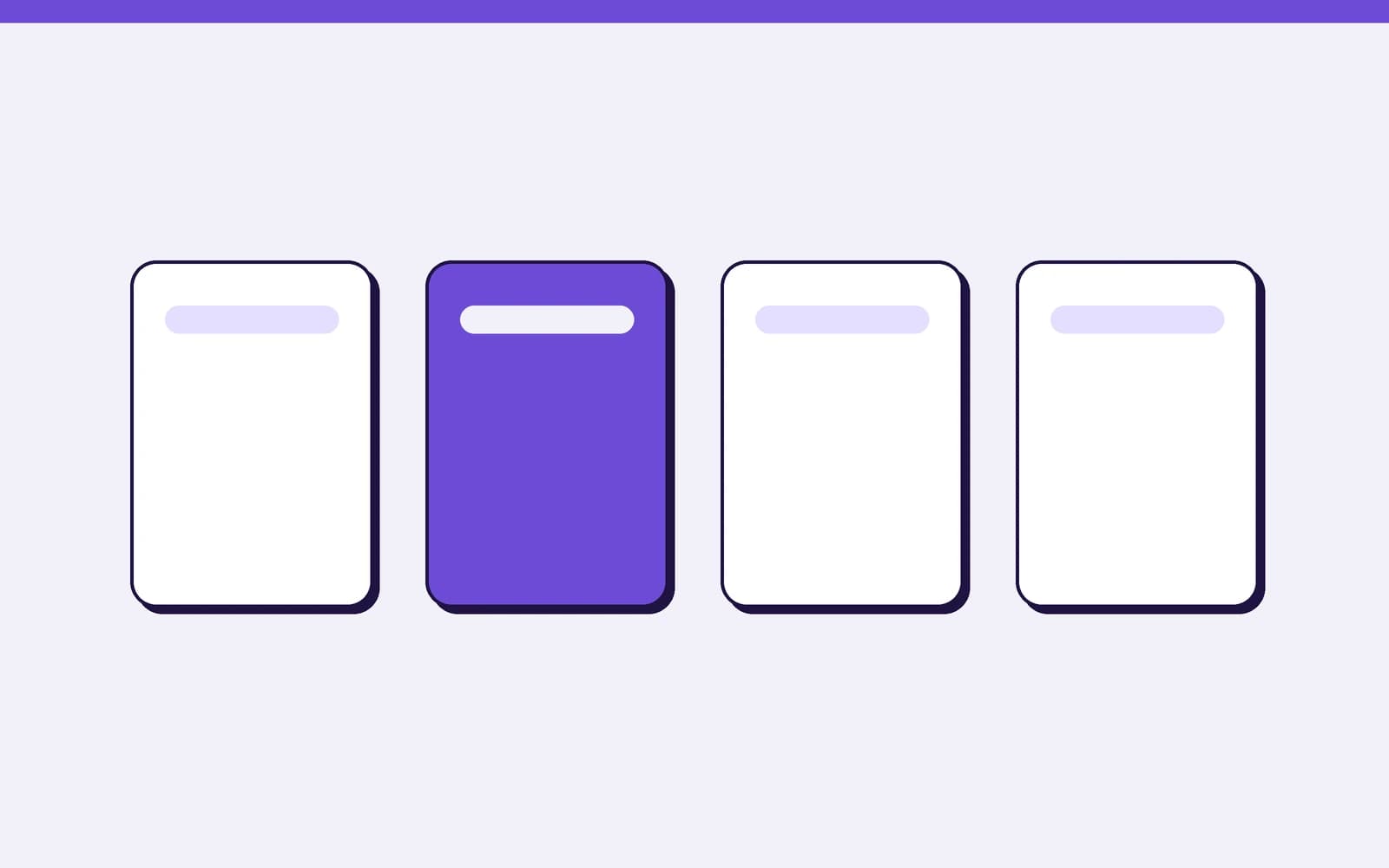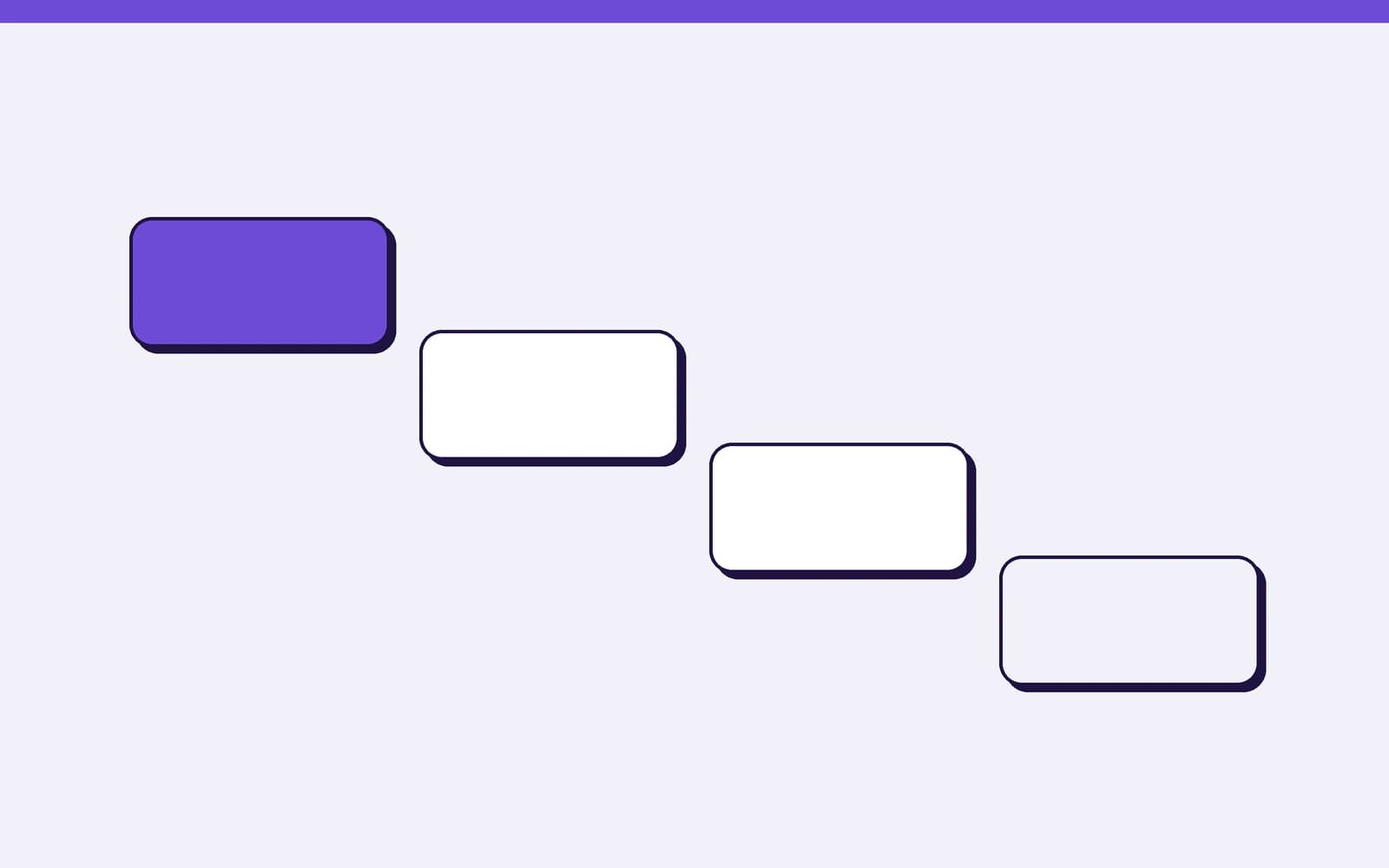
Why click depth decides what Google actually crawls
The click depth of a site is the number of clicks separating the home page from a given page, following internal links only. The home page sits at zero. A page reached from the home page is at one. A page reached from that one is at two.
Google's robot travels a site the same way: it starts from the pages it knows, follows links, and discovers the rest. That journey is not unlimited. Every site receives a crawl budget, and that budget is spent first on the most accessible pages.
A page far from the home page is therefore visited less often. Its updates are seen later. Its indexing takes longer when it is published. None of these effects is abrupt, which is exactly what makes them hard to spot.
What the problem looks like on real sites
Three situations produce the same symptom, and they have little in common.
The first is the deep category. A site organises its content into sections, then sub-sections, then sub-sub-sections. Each level adds a click. The useful page ends up at the fourth or fifth.
The second is the page behind a filter. On a commerce site, a product sheet is only reachable after choosing a category, then a size, then a colour. The links exist, but a filter produces them, and the robot does not always trigger it.
The third is the blog post with no link back. It is published, listed on the blog page for a few weeks, then pushed to page three of the list. Nothing points to it any more. Its depth increases without anyone touching the site.
None of these three produces an error. The site works, the pages respond, nothing breaks. It is a defect that stays invisible without measurement.
The threshold to keep, and how to measure it yourself
The manual method is simple. Open the home page, note the pages reachable in one click. From each of them, note those reachable in one more click. Continue until no new page appears.
It holds while the site has a few dozen pages. Beyond that it becomes impractical: you have to rebuild the full internal link graph, which no spreadsheet does by hand without error.
The criterion to watch is not the maximum depth of the site. It is the share of pages sitting beyond three clicks from the home page. A five-hundred-page site with half of it buried does not have the same problem as a site where only three pages are.
| Depth | What it means | What to do about it |
|---|---|---|
| 0 to 1 click | Home page and pages featured in the main navigation. | Reserve this level for the pages that carry the business, not for everything that exists. |
| 2 to 3 clicks | Normal zone of a structured site: categories, guides, important pages. | Nothing to fix as long as the strategic pages are there. |
| 4 clicks and beyond | Buried zone: the page is crawled less often and indexed later. | Lift first the ones already getting impressions in Search Console. |
| No path at all | Orphan page: no internal link leads to it from the site. | Give it at least two contextual inbound links, or archive it outright. |
How Atelier SEO shows the click depth of every page
Crawling rebuilds the complete internal link graph, then computes the distance of each page from the home page. The result is one value per address, not a site average.
Three signals come out of it, and they are read together. Click depth says how far the page sits. The number of inbound links says how many pages cite it. The orphan status says none does.
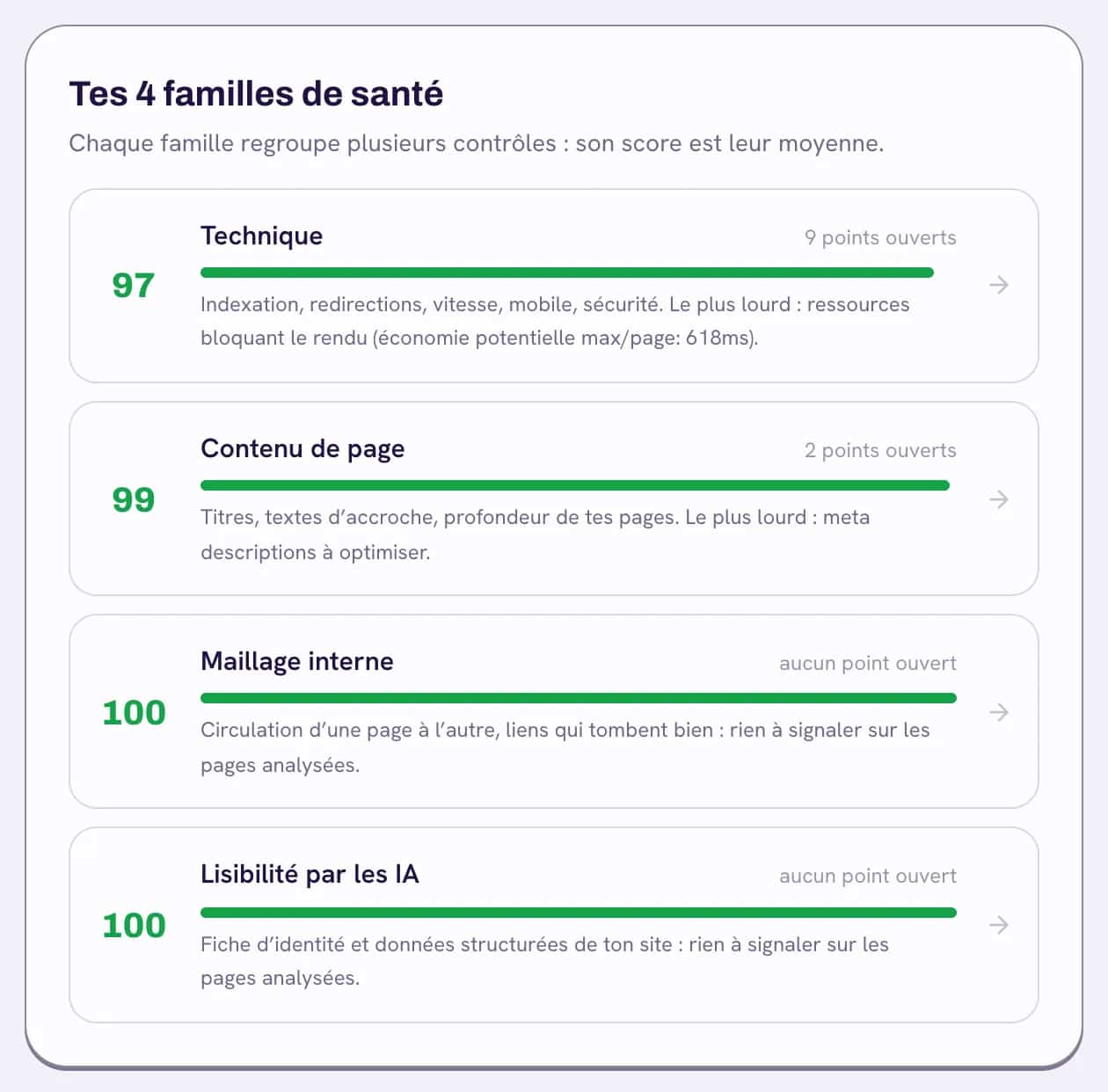
The technical audit surfaces a page as soon as it reaches four clicks, has at most two inbound links, or is orphaned. Those three conditions are the ones that make a page depend on a single access path.
Crossing with Search Console does the rest of the work. A buried page with no impression at all raises a question of topic. A buried page already getting impressions is an internal linking repair, and it goes first. Sorting those pages in full is covered in our guide on pages with no traffic.
- Sort by impressions, not by depth
A page at six clicks that Google never displays can wait. A page at four clicks already displayed goes first: the gain there is immediate.
- Add contextual links, not another menu
Two or three links from pages close in topic beat an extra navigation entry, which weighs on every page of the site.
- Revisit list pages
A paginated list buries its older items with every publication. A section page that explicitly cites its reference content fixes the effect.
- Measure again afterwards
Depth is a structural effect. It is verified by a new audit, not by the intention of having done well.
Is a buried page really a problem? The objection to settle
The objection is common and goes like this: my page ranks anyway, why should I care.
The answer is one word: dependency. A buried page that ranks holds its visibility from a single support, often an external link or an old feature. The day that support disappears, nothing in the site holds the page up.
This is a deliberate position, and it is assumed. An important page must be reachable through several internal paths, regardless of what happens elsewhere. Internal linking is the only part of your visibility you control entirely.
The opposite case exists too, and it deserves no fixing. An archive, an old service page, documentation reached by direct link: their place is deep. Lifting them would spend attention where there is nothing to gain.
What Iris prioritises once buried pages are identified
The list of buried pages is not a work plan. It becomes one when every page receives a rank and a reason.
Iris, the workshop's assistant, works on the same data as the audit and Search Console. It first surfaces pages combining excessive depth with existing impressions, because those are the only ones where adding a link produces a measurable effect in the short term. The demonstration on a real case shows the same question asked without data, then with the site's data.
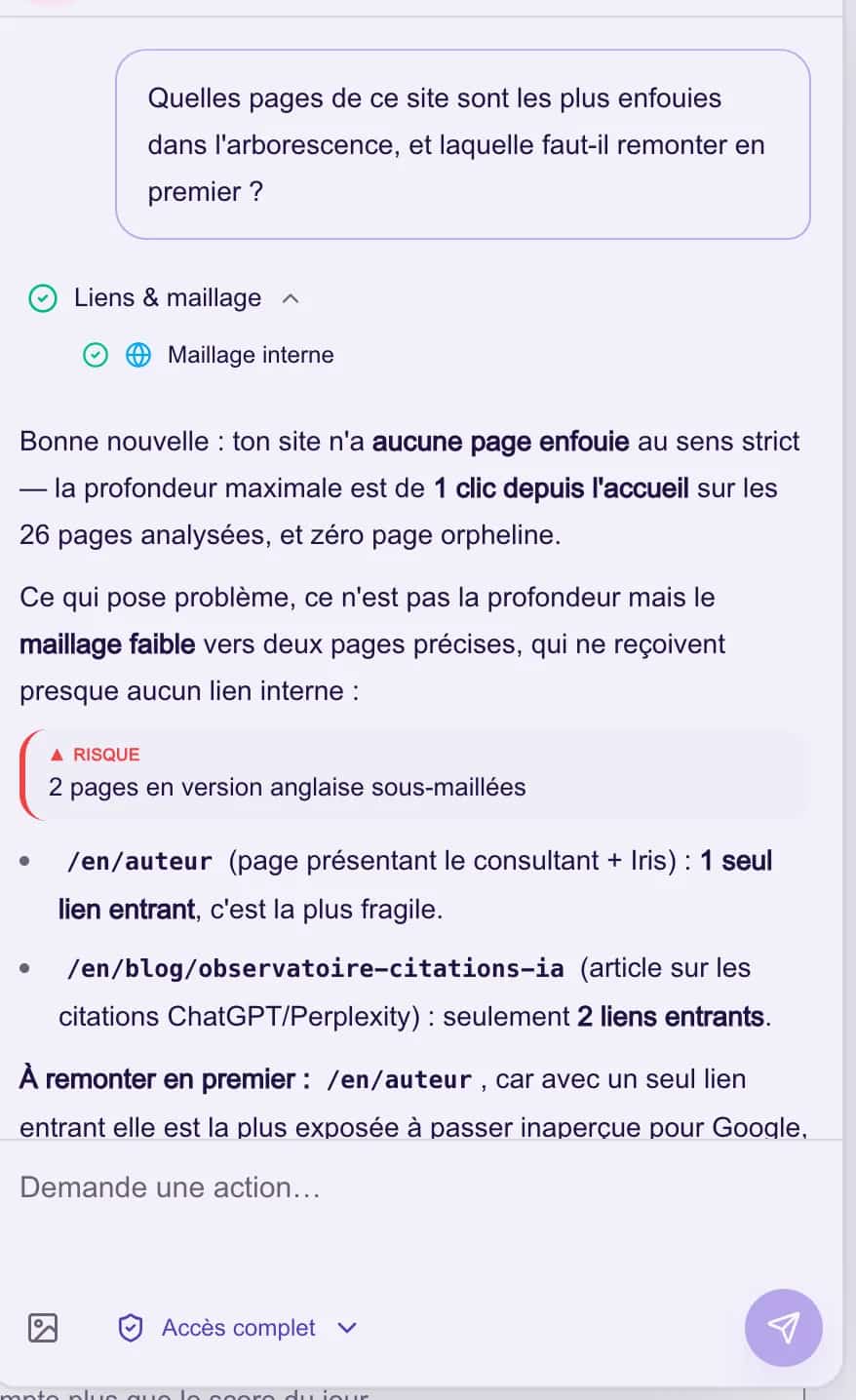
What follows depends on who executes. The plan is read and applied in your own publishing tool, with no dependency on the platform. It can also be applied by the team, and the sequence is described in our working method.
What is a good click depth for a website?
The pages that carry your business should stay at three clicks or fewer from the home page. Beyond that, a page is crawled less often and indexed later. This threshold is a working rule, not a rule published by Google.
How do I reduce click depth without redoing the menu?
Through contextual links from pages close in topic. Two or three are enough to shorten the path. Adding a navigation entry weighs on every page of the site to solve the case of a single one.
Does an orphan page always need fixing?
No. If the page has a role, give it inbound links. If it no longer has one, archive it outright with a redirect. Leaving it live with no link is the only option that settles nothing.
Does URL depth matter as much as click depth?
No. The robot follows links, not slashes. An address three levels deep reached in two clicks is better placed than a short address nothing cites.

Trust & E-E-A-T